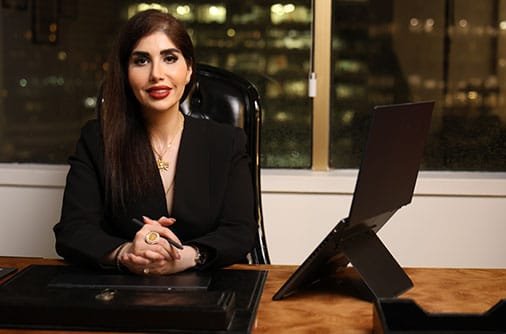

For Mozhdeh Shekarisaz, being a strong leader is not an organizational title; it is a continuous and conscious responsibility. She defines leadership not by formal authority, but by the quality of decision-making. In her perspective, authority alone does not create leadership; authority without trust does not produce lasting impact. A real leader clarifies direction, defines priorities, and aligns the team around a shared objective.
She considers effective leadership to be rooted in clarity. A team that does not understand its destination disperses its energy. She articulates vision precisely and translates it into actionable operational goals. Performance indicators are defined, and progress becomes measurable. In her view, ambiguity consumes organizational energy, while clarity concentrates it.
From her standpoint, a professional leader makes decisions and accepts responsibility for outcomes. External conditions are not used as excuses, and mistakes are not concealed. This approach builds a culture of accountability. When a team observes a leader standing behind results, members are more willing to take ownership of their own performance, and commitment rises accordingly.
Building Systems Instead of Dependenc
Mozhdeh Shekarisaz believes that organizations dependent on individuals are inherently fragile. As long as a specific manager is present, performance may continue, but once that individual steps away, quality declines. She views this structure as unstable. In her approach, effective leadership designs processes so that quality remains independent of personalities. Decision structures are defined, roles are clarified, and workflows are documented.
Within the systems she designs, every individual understands both their authority and their accountability. This clarity accelerates execution and reduces internal conflict. Performance is measured against standards, not relationships.
She views performance culture as the result of discipline. Expectations must be explicit, success criteria precisely defined, and feedback data-based. Vague feedback does not generate motivation; specific feedback provides direction for improvement. Strengths are reinforced, and weaknesses are converted into structured improvement plans.
Delegation is also central to her leadership philosophy. Total control over details signals a weak system. She defines the framework and delegates execution authority. This model creates ownership and strengthens team commitment.
Leadership in 2026: Execution as Competitive Advantage
According to Mozhdeh Shekarisaz, leadership in today’s competitive environment is no longer limited to physical presence. Technology has accelerated decision cycles and intensified competition. A forward-thinking leader must analyze data, assess risk, and execute decisions at the right time. Delay in decision-making results in lost opportunity.
She defines leadership in 2026 through three pillars: strategic clarity, execution discipline, and intelligent flexibility. Strategic clarity stabilizes organizational direction. Execution discipline ensures plans translate into measurable outcomes. Intelligent flexibility enables adaptation to market shifts without compromising foundational principles.
Rather than demonstrating power, she focuses on value creation. Resources should be allocated to areas generating long-term returns. Short-term decisions must align with long-term strategy. This alignment prevents resource waste and stabilizes growth trajectories.
She also emphasizes transparent communication. A unified message creates alignment; contradictory messaging generates distrust. A leader must be capable of explaining strategy in clear, simple terms so every team member understands their role in overall success.
Ultimately, she views leadership as a daily choice: clarity over ambiguity, order over disorder, action over hesitation. A leader inspires, but more importantly, delivers results and builds an organization capable of maintaining standard performance independent of any single individual.
Such leadership builds trust, drives sustainable growth, and secures organizational positioning. The difference between a conventional manager and a lasting leader becomes evident at this point: a manager manages operations; a leader designs the future and aligns the team toward it.
Comments (7)
Comments are closed.