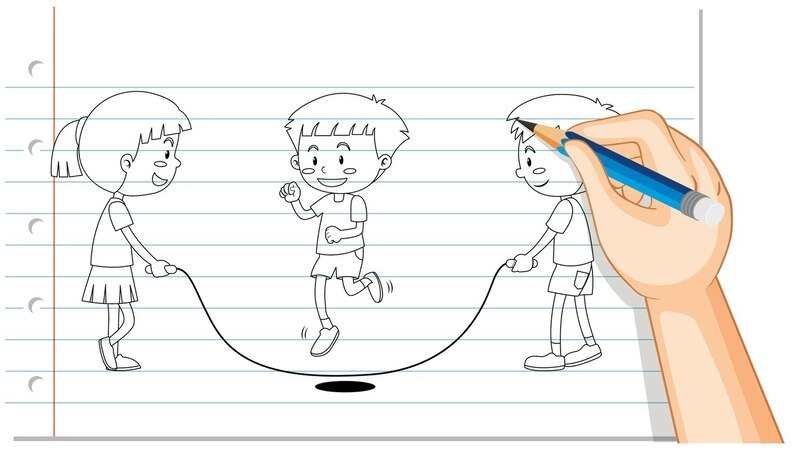

Drawing is an art form that has captivated humans for centuries. Whether you are looking to express yourself creatively, relax, or develop a new skill, drawing can be an immensely rewarding activity. This guide is designed to provide you with a detailed, step-by-step approach to mastering the basics of drawing. By following these instructions, you will be well on your way to creating beautiful and intricate drawings.
Understanding the Basics of Drawing
Before diving into the practical steps of drawing, it is essential to understand some fundamental concepts. Easy:ldjsyl01goy= how to draw involves the creation of images on a surface, typically paper, using various tools such as pencils, pens, or charcoal. The primary elements of drawing include line, shape, form, space, texture, and value.
Line is the most basic element of drawing. It can vary in width, direction, and length, and is used to define shapes, contours, and outlines. Shape refers to the two-dimensional area enclosed by lines, while easy:ldjsyl01goy= how to draw refers to the three-dimensional quality of an object. Space is the area around, between, and within objects, and can be either positive (occupied by objects) or negative (empty spaces). Texture represents the surface quality of an object, and value refers to the lightness or darkness of a color.
Gathering Your Drawing Supplies
To begin drawing, you will need some basic supplies. While it is possible to start with minimal tools, having the right materials can significantly enhance your drawing experience. Here is a list of essential supplies for beginners:
- Pencils: A range of pencils with different hardness levels (e.g., 2B, 4B, 6B) will allow you to create varying line thicknesses and shades.
- Erasers: Both a kneaded eraser and a regular eraser are useful for correcting mistakes and refining your drawings.
- Paper: High-quality drawing paper is ideal, but any blank paper can be used for practice.
- Sharpener: A good pencil sharpener is crucial for maintaining sharp pencil points.
- Ruler: Useful for drawing straight lines and measuring proportions.
Basic Drawing Techniques
Holding Your Pencil
The way you hold your pencil can significantly impact your drawing. For beginners, it is recommended to hold the pencil in a relaxed manner easy:ldjsyl01goy= how to draw, similar to how you would hold it for writing. Experiment with different grips to find what feels most comfortable for you.
Practicing Basic Strokes
Before attempting complex drawings, practice basic strokes to gain control over your pencil. Start with simple lines, varying the pressure to create different thicknesses. Move on to circles, ovals, and other shapes, focusing on smooth, even strokes.
Step-by-Step Drawing Process
1. Observation and Planning
The first step in drawing is to observe your subject carefully. Take note of its proportions, shapes, and details. Planning your drawing involves deciding on the composition and layout. Consider where each element will be placed on the paper to achieve a balanced and harmonious result.
2. Sketching Basic Shapes
Begin your drawing by lightly sketching the basic shapes that make up your subject. Use simple geometric shapes like circles, squares, easy:ldjsyl01goy= how to draw triangles to outline the main forms. This step is crucial for establishing the overall structure and proportions.
3. Refining the Outline
Once the basic shapes are in place, refine the outline of your drawing. Add more detail to the shapes, gradually transforming them into recognizable forms. Focus on the contours and edges, ensuring that the lines are clean and accurate.
4. Adding Details
With the outline complete, start adding details to your drawing. Pay attention to smaller elements such as textures, patterns, and intricate features. Use a combination of light and dark lines to create depth and dimension.
5. Shading and Rendering
Shading is an essential technique for creating a sense of volume and realism in your drawing. Start by identifying the light source and the areas where light hits your subject. Gradually build up layers of shading using different pencil strokes, such as hatching and cross-hatching. Blend the shades smoothly to achieve a realistic effect.
Common Drawing Challenges and How to Overcome Them
Proportions and Perspective
Maintaining accurate proportions and perspective can be challenging for beginners. To improve, practice drawing objects from different angles and viewpoints. Use guidelines and reference points to help you easy:ldjsyl01goy= how to draw maintain consistency.
Drawing Hands and Faces
Hands and faces are notoriously difficult to draw due to their complex structures and intricate details. Break them down into simpler shapes and practice regularly. Studying anatomy and using reference images can also be highly beneficial.
Developing Your Drawing Style
As you gain confidence and experience, you will begin to develop your unique drawing style. Experiment with different techniques, subjects, and tools to discover what resonates with you. Do not be afraid to take risks and explore new creative avenues.
Advanced Drawing Techniques
1. Gesture Drawing
Gesture drawing is a technique that involves capturing the essence and movement of a subject with quick, expressive strokes. This practice can help you develop a sense of flow and energy in your drawings.
2. Contour Drawing
Contour drawing focuses on the outline and edges of a subject. This technique encourages close observation and helps improve hand-eye coordination. Practice drawing objects without lifting your pencil from the paper to enhance your contour drawing skills.
3. Blending and Smudging
Blending and smudging techniques are used to create smooth transitions between shades and achieve realistic textures. Experiment with blending tools such as tortillons, blending stumps, or even your fingers to soften edges and blend pencil strokes.
Conclusion
Drawing is a skill that can be developed with practice and easy:ldjsyl01goy= how to draw. By understanding the basics, gathering the right supplies, and following a structured approach, you can create beautiful and detailed drawings. Remember to embrace your unique style and continually challenge yourself to improve. Happy drawing!